Why Engineered Rope and Cordage Can’t Be Treated Like a Commodity
10 Engineering Realities That Impact Cost, Performance, and Reliability
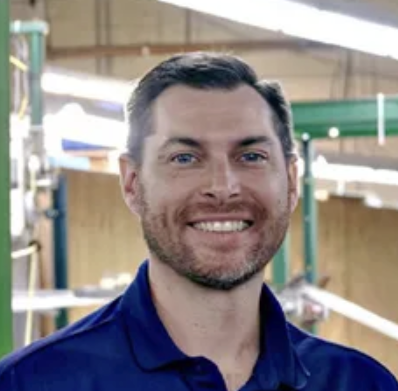
An Interview with NeoCorp CEO Andrew Jencks
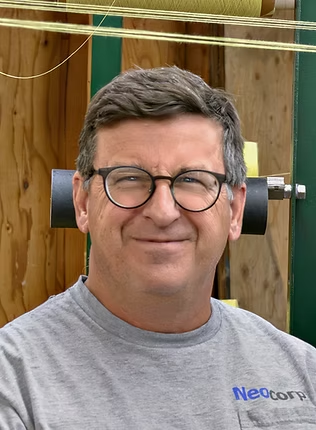
Most people think rope is simple. “Cut it to length, pick a color, and tie a knot,” says Andrew Jencks, CEO of NeoCorp. “Then they talk to a rope manufacturer.”
That moment, when a seemingly basic product turns into an engineering discussion, is where Jencks says many customers begin to rethink how rope, cordage, and bungees actually function inside modern systems. In a recent interview at NeoCorp’s manufacturing facility, Jenks walked through the questions he hears most often and the realities behind them.
According to Jencks, applications are changing. “They’re getting hotter, tighter, and more performance-driven,” he explains. “And rope still has to follow the laws of physics and economics.”
Below are ten engineering realities, drawn directly from customer conversations, that Jencks says are shaping how rope is specified, designed, and used heading into 2026.
1. “High-Temperature Bungee” Doesn’t Mean One Thing
One of the first misconceptions Jencks points to is the phrase high-temperature bungee.
“That sounds specific, but it really isn’t,” he says. “The first question we ask is how hot and for how long. A lot of customers don’t actually know the temperature; they just know the application.”
Jencks explains that NeoCorp engineers often work backward from operating conditions to define realistic requirements. That matters because higher-temperature materials carry higher costs and come with textile limitations that affect how a product can be built.
“A bungee has two critical elements,” he notes. “The jacket deals with abrasion, heat, and environment. The core controls stretch and recovery. Those two have to work together.”
A bungee designed for desert heat, he adds, is very different from one used near engines or in aerospace systems. By adjusting materials and construction, NeoCorp can tune stretch, retraction force, thermal performance, and even limit elongation using what the company calls shock-lock designs.
Why it matters: Poorly defined temperature requirements either lead to premature failures or unnecessary material costs. Proper engineering delivers predictable performance at the right price.
2. Diameter Is More Complicated Than It Looks
Diameter is another area where assumptions quickly break down.
“People expect diameter to be a simple number,” Jencks says. “Once you factor in global sourcing, it gets messy fast.”
He points to challenges such as metric versus U.S. measurement systems, varying tolerance expectations by industry and region, and estimated sizes that don’t match reality. Traditional cordage standards often rely on density assumptions tied to construction and machine settings.
“That approach doesn’t always work for customers who need a very specific fit,” Jencks explains. Instead, NeoCorp uses calibrated dial-gauge measurement to create repeatable, documented results. “Repeatability is everything,” he says. “No matter who measures it, we need the same answer.”
Why it matters: Consistent diameter ensures components fit correctly across long
production runs, automated systems, and multiple suppliers.
3. Stretch and Pre-Stretch Are Often Confused
Stretch behavior is another frequent source of confusion.
“Every cord has pre-stretch,” Jencks explains. “That’s when the construction tightens, and fibers align under load. Heat-setting can reduce it, but it never goes away completely.”
True stretch, by contrast, occurs when fibers themselves elongate under added force, and not all cords are capable of that behavior.
“If you don’t specify the right behavior up front,” Jencks says, “you get surprises later.”
Why it matters: Misunderstanding stretch leads to sag, load shifts, and system instability that often show up only after installation.
4. Color Is an Engineering Decision
Color may appear to be a branding detail, but Jencks says it is often an engineering decision.
“Different fibers react very differently to dyeing,” he notes. “Once you add yarn styles, spun, filament, textured, you’re balancing cost, minimums, lead times, and performance.”
NeoCorp frequently works with customers to reconcile brand requirements with functional constraints. “Sometimes the best solution isn’t obvious,” Jencks says. “But you can usually find a path that works.”
Why it matters: The right dyeing approach protects strength, durability, and delivery timelines while still meeting branding goals.
5. One Technology Can Produce Very Different Results
Much of NeoCorp’s flexibility comes from its proprietary Interwarp™ knitting technology.
“It’s a blend of braiding, twisting, and weaving,” Jencks explains. “We have 27 different variables we can adjust.”
Those adjustments allow engineers to control strength, flexibility, abrasion resistance, grip with hardware, elongation, density, color patterns, and cost efficiency, all on the same platform.
“We can be making cordage for oyster farming in the morning and aerospace components later the same day,” he says.
Why it matters: Customers get application-specific performance without paying for excess material or unnecessary complexity.
6. Reflective Yarn Has to Be Engineered Carefully
Reflective yarns, commonly associated with safety apparel, present unique challenges in cordage.
“They’re made from microscopic glass beads bonded to a substrate,” Jencks explains. “That makes them highly reflective, but also abrasive.”
Because reflective yarn is expensive and can affect durability, NeoCorp applies it selectively based on placement, quantity, and refraction angle.
Why it matters: Intentional design delivers visibility where it’s needed without compromising durability or driving up cost.
7. Aerospace Work Changes How Everything Else Is Built
Jencks recalls a project where NeoCorp produced a high-temperature drawcord used to secure tool bags during NASA spacewalks.
“The materials weren’t exotic,” he says. “But the process was.”
The project required triple verification, extensive documentation, and certification to the highest standards. That discipline, Jencks notes, now informs NeoCorp’s broader manufacturing practices.
Why it matters: Processes developed for aerospace raise quality and reliability across commercial and industrial products.
8. High-Temperature Bungees Are Solving New Heat Problems
Jencks says some of the fastest-growing applications for engineered bungees are also some of the hottest, literally.
“We’re seeing more situations where standard elastic materials just don’t survive,” he explains. “They lose strength, break down, or become unsafe to handle.”
To address this, NeoCorp combines different materials so each does what it’s best at. In high-heat environments, such as suppressor wraps or protective covers, one material provides the elastic tension while another manages heat and protects the user.
“It’s really about separating the jobs,” Jencks says. “Stretch here, heat resistance there.”
Why it matters: As temperatures increase, standard bungees fail faster. Engineered bungees improve safety, last longer, and perform more consistently in high-heat environments.
9. Engineered Rope and Cordage Doesn’t Have to Be Round
Most people picture rope as round, but Jencks says that assumption limits what cordage can do.
“Once you realize shape is a design option, a lot of problems suddenly have solutions,” he explains. Using NeoCorp’s manufacturing technology, cordage can be produced in a range of shapes designed to match the application rather than force the application to adapt to the rope.
These include:
Triangular profiles are often used in consumer products like dog toys
Square cords, such as glass roller tape in manufacturing environments
Flat or rectangular profiles for load distribution and surface contact
C-shaped profiles are used as protective covers for glass or panels
D-shaped profiles are commonly used as high-temperature gaskets in furnaces and thermal systems
By designing the shape into the cordage itself, NeoCorp helps customers solve fit, wear, and alignment challenges at the component level.
Why it matters: Shaped cordage improves fit and function, reduces wear, and simplifies installation—often eliminating the need for secondary components or workarounds.
10. Creep Is Quiet, but Expensive
Creep, or cold flow, happens slowly—so slowly that it often goes unnoticed until performance suffers.
“Over time, constant tension causes some materials to permanently stretch,” Jencks explains. “That’s when systems lose alignment or stop working the way they should.” In applications where tension needs to remain stable, NeoCorp designs constructions that limit this long-term movement without making the product stiff or difficult to use.
Why it matters: Controlling creep helps systems hold their shape and performance over time, reducing maintenance, downtime, and premature replacement.
A Shift in Perspective
For Jencks, the conclusion is straightforward.
“Cordage has existed for thousands of years,” he says. “But it still answers to physics and economics. Our job is to understand those realities and engineer within them.”
As applications continue to demand more from every component, that engineering mindset, rather than commodity thinking, is what Jencks believes customers increasingly value.