
Why Rope & Bungee Systems Fail in Water Sports Applications
- Andrew Jencks

- 2 days ago
- 4 min read

As paddling season ramps up, we get a wave of inquiries at NeoCorp that all sound pretty similar:
“Our original vendor’s bungee kits kept wearing out faster than they should. We need something that can actually hold up to water, sun, and heavy outdoor use. Neocorp developed a NeoStretchTM Shock Cord bungee fast, and it’s 10 times better.” -OEM, Kayak Mfg 2025
Most manufacturers are surprised by how much the right cordage affects long-term product durability, warranty calls, and customer satisfaction.
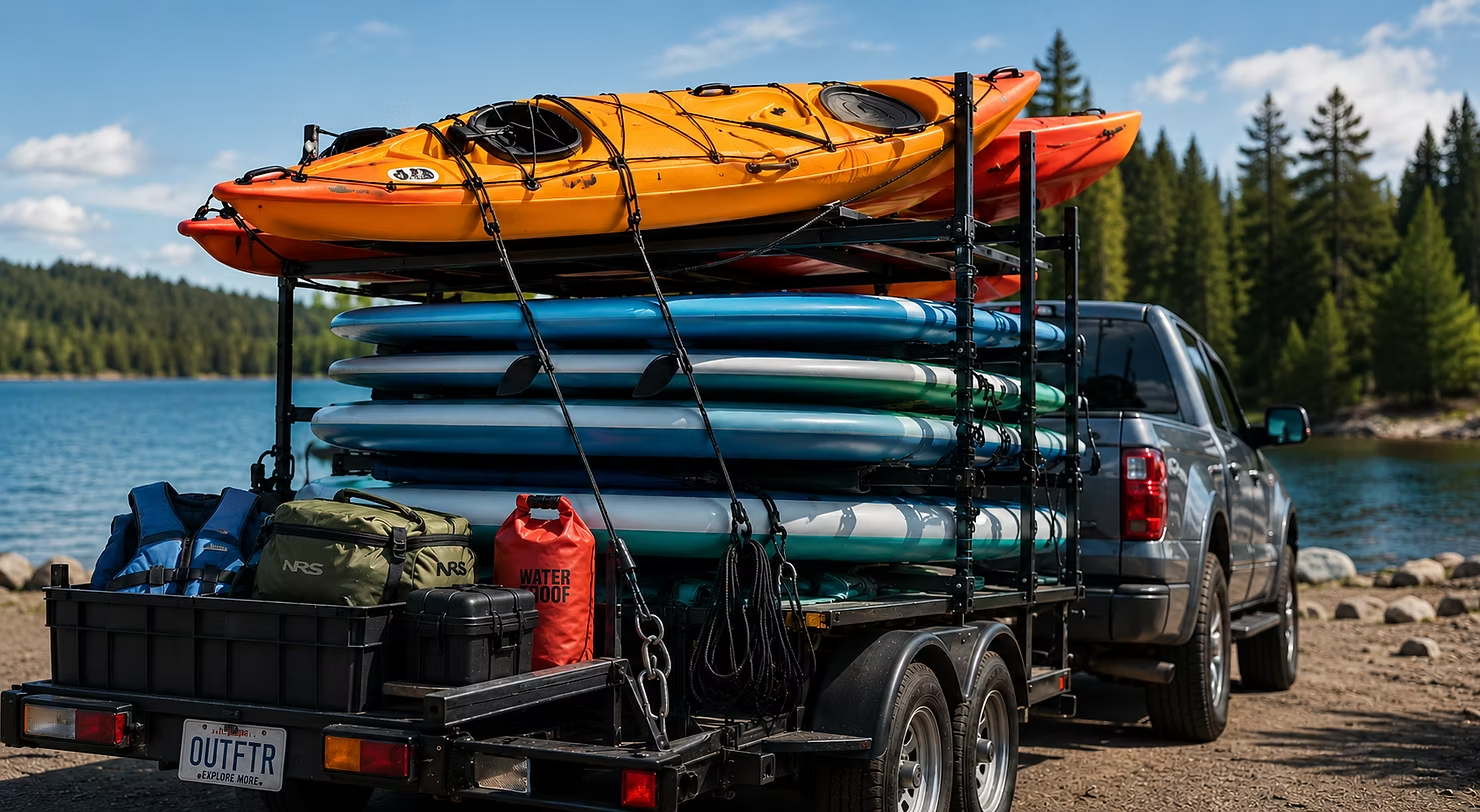
Outdoor product manufacturers building kayaks, paddleboards, fishing equipment, small watercraft accessories, and other recreation products all face the same challenge: building gear that performs reliably through constant outdoor exposure and repeated seasonal use.
And while the right solution always depends on the application, choosing the right rope or bungee system becomes much easier once you understand how different materials perform in real-world water sports environments.
Here’s where manufacturers and operations teams are using rope and bungee systems across water sports products, what they’re specifying, and why it works.
Kayak Deck Rigging: Where the Abuse Starts

Cheap shock cord goes soft fast. The bungee loses its rebound, the gear starts shifting in conditions where shifting gear is the last thing anyone wants, and the customer remembers your brand for the wrong reason.
What works here:
"1/4" to 3/8" marine-grade shock cord with a UV-resistant polyester jacket. The jacket protects the latex core from sun degradation, and the elasticity stays consistent across hundreds of cycles. Available in standard black or in custom colors for OEMs matching brand palettes."
Andrew Jencks, Neocorp - Head of Engineering & Product Development

Securing Cargo on Canoes
Canoes get loaded differently. Trips are longer, gear is bulkier, and cargo has to stay locked down through rapids, portages, and shifting weight. Bungee alone doesn't cut it here.
You need an actual tie-down rope with enough tensile strength for dynamic loading and enough abrasion resistance to ride against gunwales, dry boxes, and rough cargo without chafing through. This is where the wrong spec turns into lost gear and unhappy customers.
What works here: 1/4" to 3/8" braided polyester or nylon rope. Polyester is the better pick for outfitter fleets and OEM packaging because it doesn't lose strength when wet, holds knots well, and resists UV better than nylon over time. Nylon is the call when you need some stretch to absorb dynamic shock loading." – Andrew Jencks, Neocorp - Head of Engineering & Product Development

Windsurfing and Small Sail Rigs: Tension That Doesn't Drift
This is where the spec gets serious. Windsurfing and small-sailcraft applications depend on consistent tension under load. Stretch, slip, or fade in performance means lost control on the water and a frustrated customer.
Rope that's "good enough" for general marine use is not good enough here. The tolerances are tighter, the loads are heavier, and the consequences of failure are bigger.
What works here: "Low-stretch double-braid polyester for primary rigging, typically in 3/16" to 5/16" diameters depending on load. For high-load applications, specialty cordage with a Kevlar core gives the right balance of strength, minimal stretch, and grip in hardware. Avoid polypropylene in any rigging that sees real load. It fades, it weakens in the sun, and it doesn't hold."
– Andrew Jencks, Neocorp - Head of Engineering & Product Development

Paddleboards & Small Crafts: Deck Lines That Stay Sharp
Stand-Up Paddleboards and smaller watercraft don't need heavy rigging, but the cordage on them is the first thing customers notice and the first thing they complain about when it fails. Deck lines and bungee loops sit in full sun, get pulled on constantly, and frame the visual brand of the board.
A faded, frayed, or saggy cord is a warranty issue waiting to happen. It's also the kind of thing that shows up in reviews.
What works here: "1/8" to 1/4" UV-jacketed shock cord for bungee sections, and low-diameter braided polyester for fixed deck lines. Color matters here. For OEMs running multiple SKUs, consistent color across product lines is part of the brand identity, and custom color runs are usually worth the small upfront effort."
Andrew Jencks, Neocorp - Head of Engineering & Product Development
Dock, Marina, and Other Watersports Rope Applications
The same material logic applies to a lot of equipment beyond paddlecraft. Tow ropes for water skiing and wakeboarding face heavy shock loads with every wipeout. Fender lines and mooring lines on personal watercraft fight UV, salt, and abrasion every single day. Anchor rodes need to stretch under load without snapping.
It carries over to dock, and marina accessories, fishing equipment storage and retention systems, marine cargo management on small craft, and the temporary tie-downs outfitters use for staging and transport. Different applications, same enemies: UV, salt, abrasion, and shock loading. The right cordage spec handles all of them.
What works here: "Marine-grade polyester for low-stretch holding lines, marine-grade nylon where shock absorption matters most, and UV-jacketed shock cord wherever elasticity is the requirement. Skip polypropylene for anything that has to last more than a season in the sun."
Andrew Jencks, Neocorp - Head of Engineering & Product Development
Ready to Spec Cordage for Your Next Water Sports Project?

Outdoor Sporting Goods Manufacturers, outfitters, and retailers buy cordage for three reasons:
gear that performs reliably,
products that hold up across seasons,
and end users who don't call back with warranty complaints.
The right material in the right diameter delivers all three.
At NeoCorp, we manufacture a full range — marine-grade polyester, nylon, bungee and shock cord, and specialty Kevlon-core options. All UV-resistant, all built for marine environments, and all available in the diameters, colors, and custom specs OEMs and outfitters actually need. Everything is made in the U.S., which means consistent quality across production runs and lead times that don't depend on a container ship.



Comments