
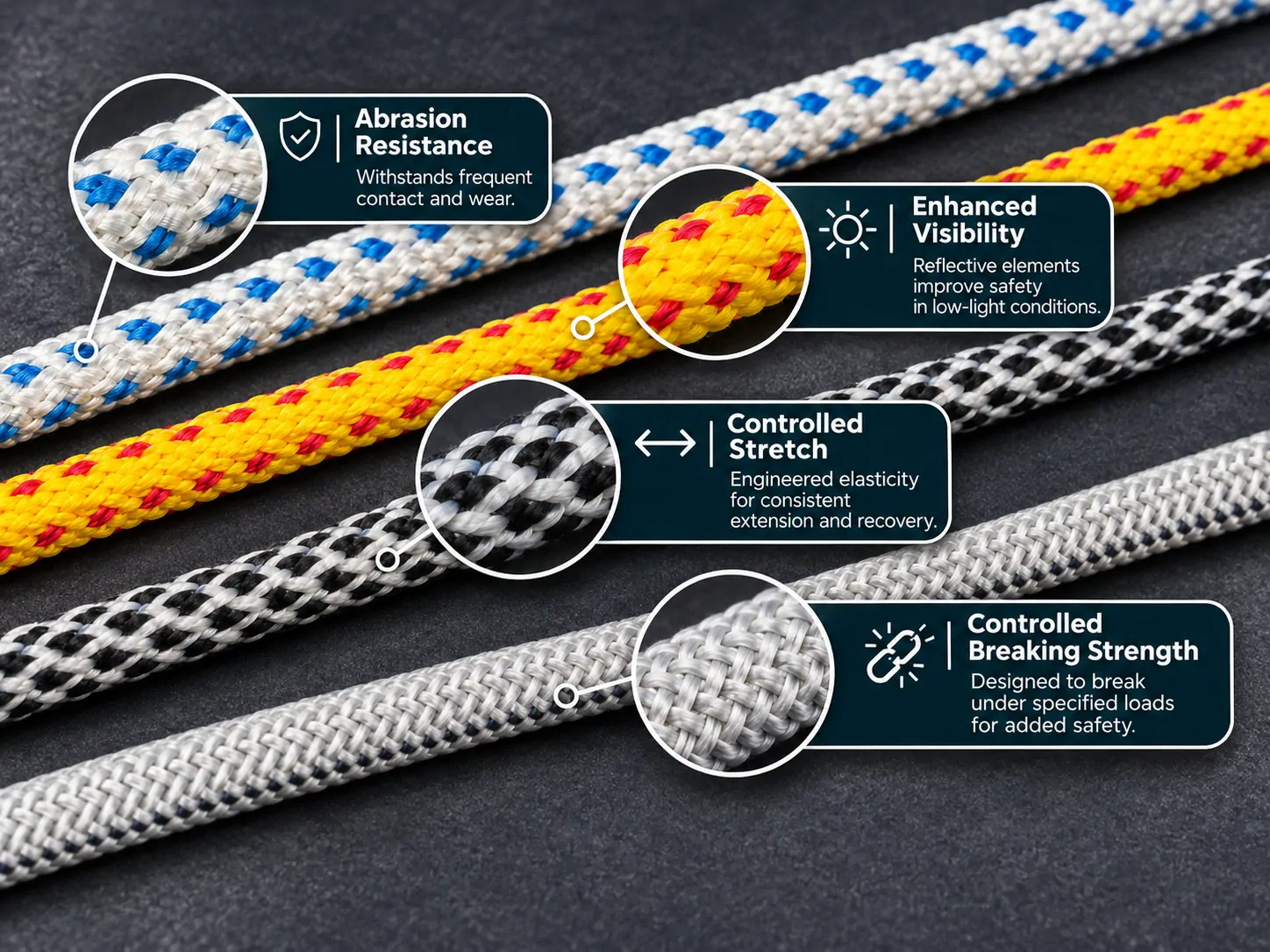
How Industry Trends Are Changing Rope and Cordage Requirements
From pet products and consumer goods to rugged outdoor applications, evolving market demands are influencing how manufacturers approach material selection, durability, and product performance.
Rope and bungee cord may represent only a small part of a finished product, but their performance can make a meaningful difference in how that product functions, withstands repeated use, and meets customer expectations.
Across industries, manufacturers are responding to changing consumer preferences, competitive pressures, and increasingly specialized performance requirements. While some customers are seeking premium features and differentiated products, others are becoming more selective about spending.
These developments are encouraging manufacturers to look more closely at the materials and components they use. For rope and cordage applications, that means considering more than basic strength, diameter, or price.
At NeoCorp, our experience manufacturing engineered rope, cordage, and bungee provides a practical perspective on the performance requirements manufacturers face across three key markets: pet products, consumer goods, and rugged outdoor applications.
1. Pet Products: Changing Consumer Expectations and Product Differentiation
The pet products industry continues to evolve as pet ownership grows and consumers make more deliberate purchasing decisions.
According to IBISWorld's Pet Stores in the US report (August 2026), the industry is expected to generate approximately $32.5 billion in revenue in 2026. However, spending patterns are becoming increasingly divided. While budget-conscious households are limiting discretionary purchases, other consumers continue to seek premium products.
IBISWorld also estimates that the US population of cats and dogs will reach approximately 203.9 million in 2026, growing to 215.6 million by 2031.
For pet product manufacturers, these trends highlight opportunities to differentiate products through quality, functionality, durability, and thoughtful design.
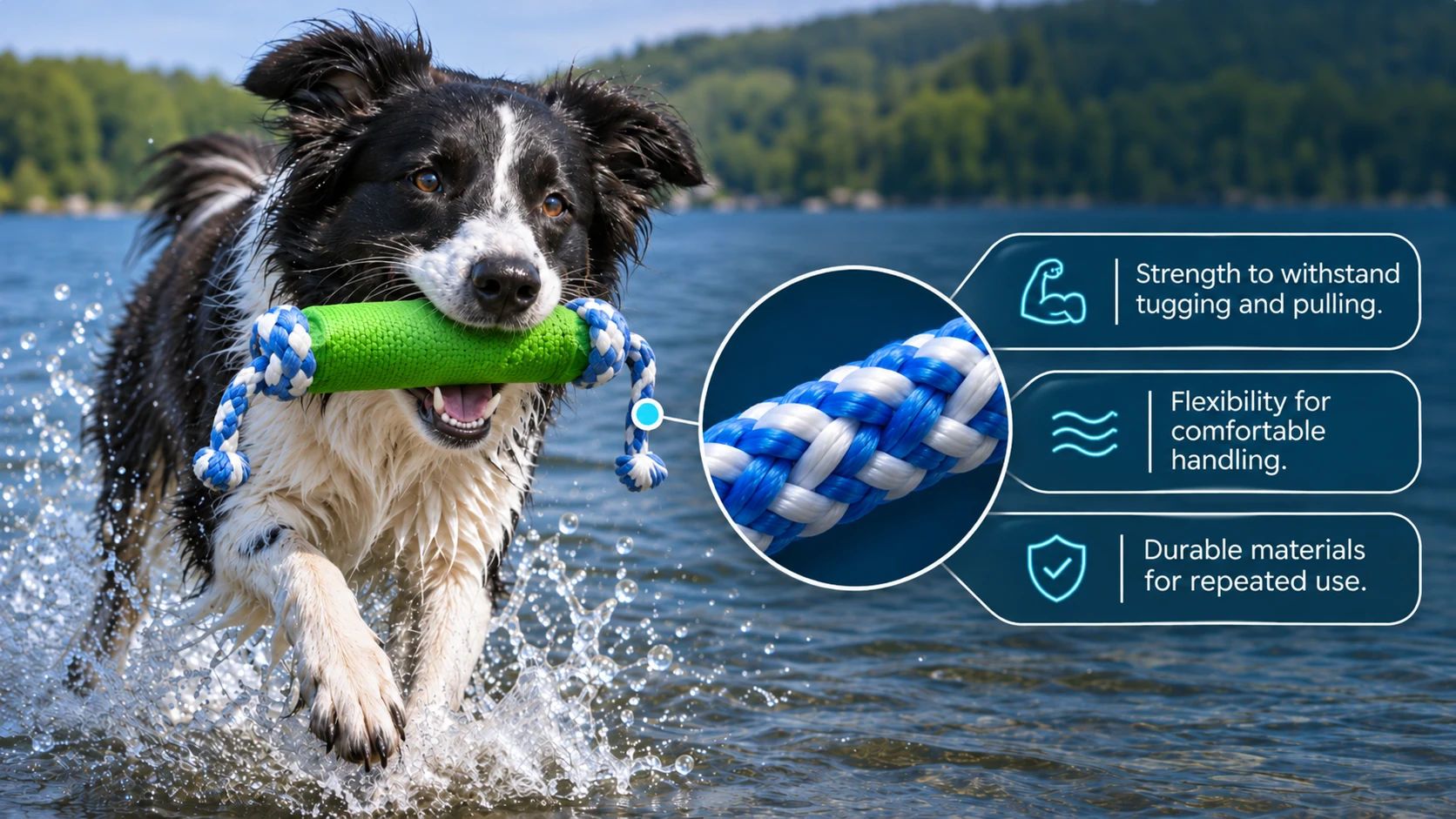
Braided rope in a pet toy: strength for tugging, flexibility for comfortable handling, and durable materials for repeated use.
Leashes and Leads: Balancing Strength and Comfort
Dog leashes and leads must provide sufficient strength for their intended use while remaining flexible and comfortable to handle.
Fiber selection, rope diameter, and braid construction influence how a leash bends, feels, and performs through repeated use. Evaluating these characteristics together helps manufacturers select cordage suited to their product requirements rather than relying on strength alone.
Pet Toys: Material Selection for Repeated Play
Rope toys experience repeated tugging, pulling, twisting, and handling, placing demands on fiber durability and rope construction.
For products that pets may chew or carry, material suitability is also an important consideration. Manufacturers need to evaluate the intended use, potential hazards, and how different constructions respond to repeated activity.
Appropriate fiber and braid selection can help manufacturers develop products that meet their functional and design objectives.
Interactive Toys: Controlled Stretch and Recovery
Interactive pet toys incorporating bungee cord introduce another important performance characteristic: elasticity.
The amount of stretch, resistance, and recovery affects how a toy functions during repeated use. Consistent elastic performance depends on selecting appropriate materials and bungee constructions.
As competition continues across premium and value-oriented pet product categories, attention to these technical characteristics can help manufacturers differentiate their finished products.
2. Consumer Goods: Innovation, Functionality, and Specialized Performance
Manufacturers of recreational equipment and consumer goods face increasing pressure to deliver products that stand out through design, functionality, and performance.
IBISWorld's Athletic & Sporting Goods Manufacturing in the US report (September 2026) identifies a shift toward more selective purchasing, with consumers delaying equipment replacements and manufacturers responding through product innovation, differentiation, and specialized accessories.
Meanwhile, the Hiking & Outdoor Equipment Stores in the US report (August 2026) indicates that more than 183.2 million Americans participated in outdoor activities in 2025, compared with 181 million the previous year, even as equipment retailers faced spending pressures.
The report also highlights growing emphasis on lightweight, durable, versatile, and customizable outdoor products.
For manufacturers incorporating rope and bungee, these developments reinforce the importance of components that support the finished product's intended function and design.
Kayaks and Outdoor Recreation: Durability in Changing Conditions
Bungee cord is commonly used in kayak deck systems to secure equipment and accessories.
These components face repeated stretching and exposure to sunlight, moisture, and changing temperatures. Over time, environmental conditions can affect elasticity and material performance.
For manufacturers, selecting appropriate bungee constructions involves evaluating UV resistance, protective jacket materials, abrasion resistance, and stretch recovery.
The goal is to choose components suited to the conditions in which the finished product will be used.
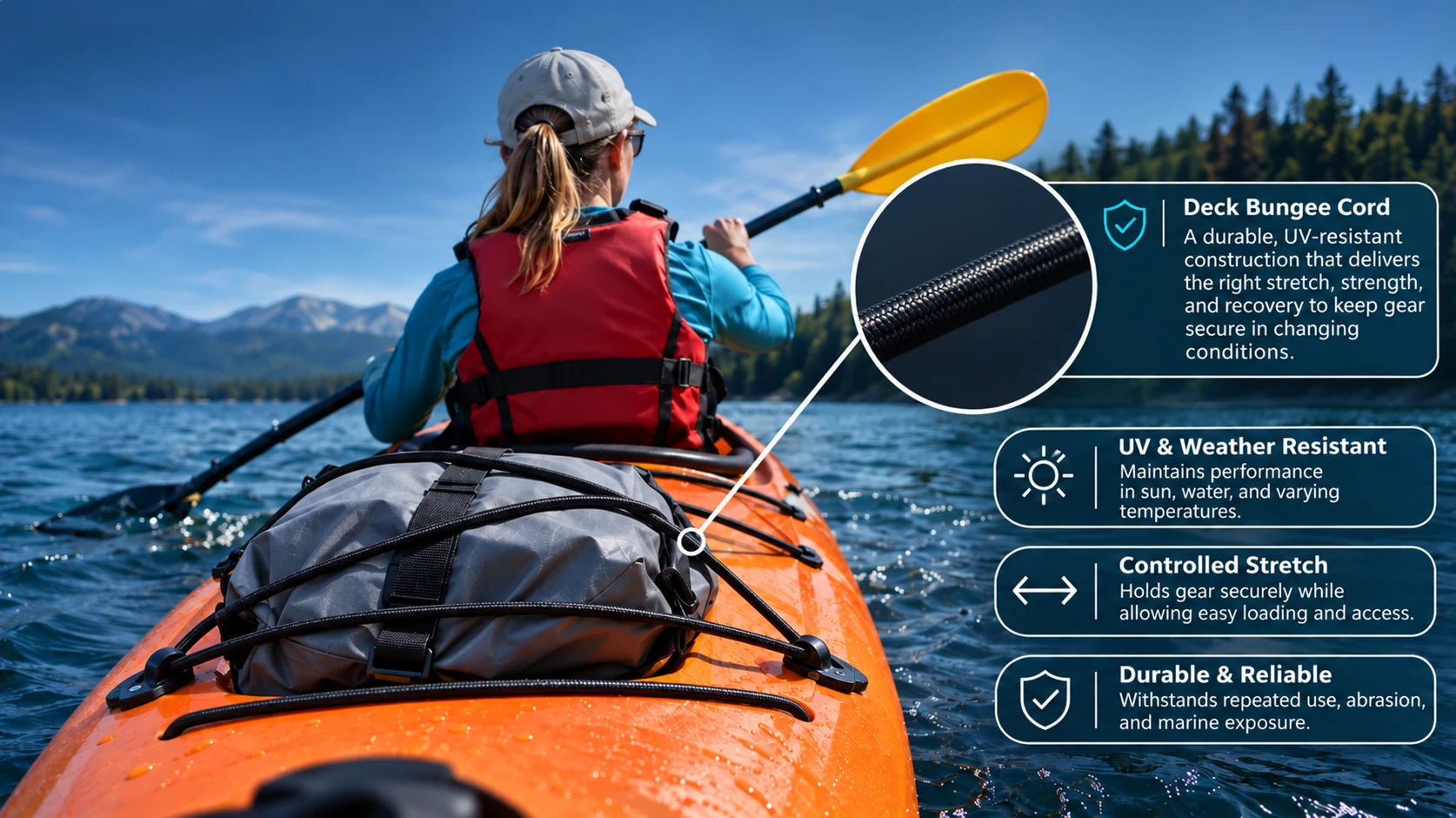
Kayak deck bungee: UV and weather resistance, controlled stretch for loading gear, and durability in marine conditions.
Tents and Outdoor Shelters: Maintaining Reliable Tension
The outdoor shelter market offers another example of changing product requirements.
IBISWorld's Tent, Awning & Canvas Manufacturing in the US report (August 2025) identifies growing consumer interest in durable, lightweight, and multifunctional products. Manufacturers are responding through material innovation and improved product designs while balancing quality with competitive pricing.
For tents and shelters, cordage plays an important role in securing components and maintaining tension.
When rope gradually elongates under sustained load, it can create unwanted slack that affects shelter performance. Low-creep rope constructions, designed to limit gradual elongation, can help maintain tension in suitable applications.
Flexibility and resistance to tangling are also important for products that must be frequently assembled, packed, and stored.
Theater and Entertainment: Performance Without Distraction
In theater and entertainment environments, rope and cordage may need to perform their function without becoming visually distracting.
For appropriate backstage and equipment applications, non-reflective black cordage can help components remain discreet under stage lighting.
Strength, flexibility, handling, and surface characteristics must also be evaluated based on the specific application.
This illustrates how engineered cordage can address requirements that go beyond traditional measures of strength and durability.
3. Rugged Outdoor Applications: Engineered for Demanding Commercial Environments
Larger commercial and OEM applications place additional demands on rope and cordage.
Repeated tension, vibration, abrasion, environmental exposure, and specialized operating requirements can all influence material performance. In some industries, regulatory and environmental considerations also affect equipment design.
For manufacturers serving these markets, selecting appropriate rope constructions means understanding the operating conditions, expected loads, and performance requirements of each application.
Transportation and Trucking: Durability Under Repeated Stress
Rope and bungee used in truck-cover and trailer-cover systems must withstand repeated movement, vibration, tension, and outdoor exposure.
These conditions place demands on breaking strength, abrasion resistance, and controlled elasticity.
Manufacturers need to consider not only a material's initial performance but also how it responds to repeated use and environmental conditions.
Selecting appropriate cordage constructions can help support reliable performance in demanding transportation applications.
Ski Resorts and Winter Recreation: Visibility and Environmental Resistance
Commercial ski resort environments introduce challenges involving snow, moisture, low temperatures, repeated equipment use, and changing visibility conditions.
For suitable equipment and boundary applications, reflective cordage can improve visibility when illuminated, particularly in low-light conditions.
Abrasion resistance is another important consideration in environments where rope experiences frequent contact with equipment, hardware, or other surfaces.
For manufacturers developing products for winter environments, material flexibility, visibility characteristics, and resistance to wear must be evaluated together.
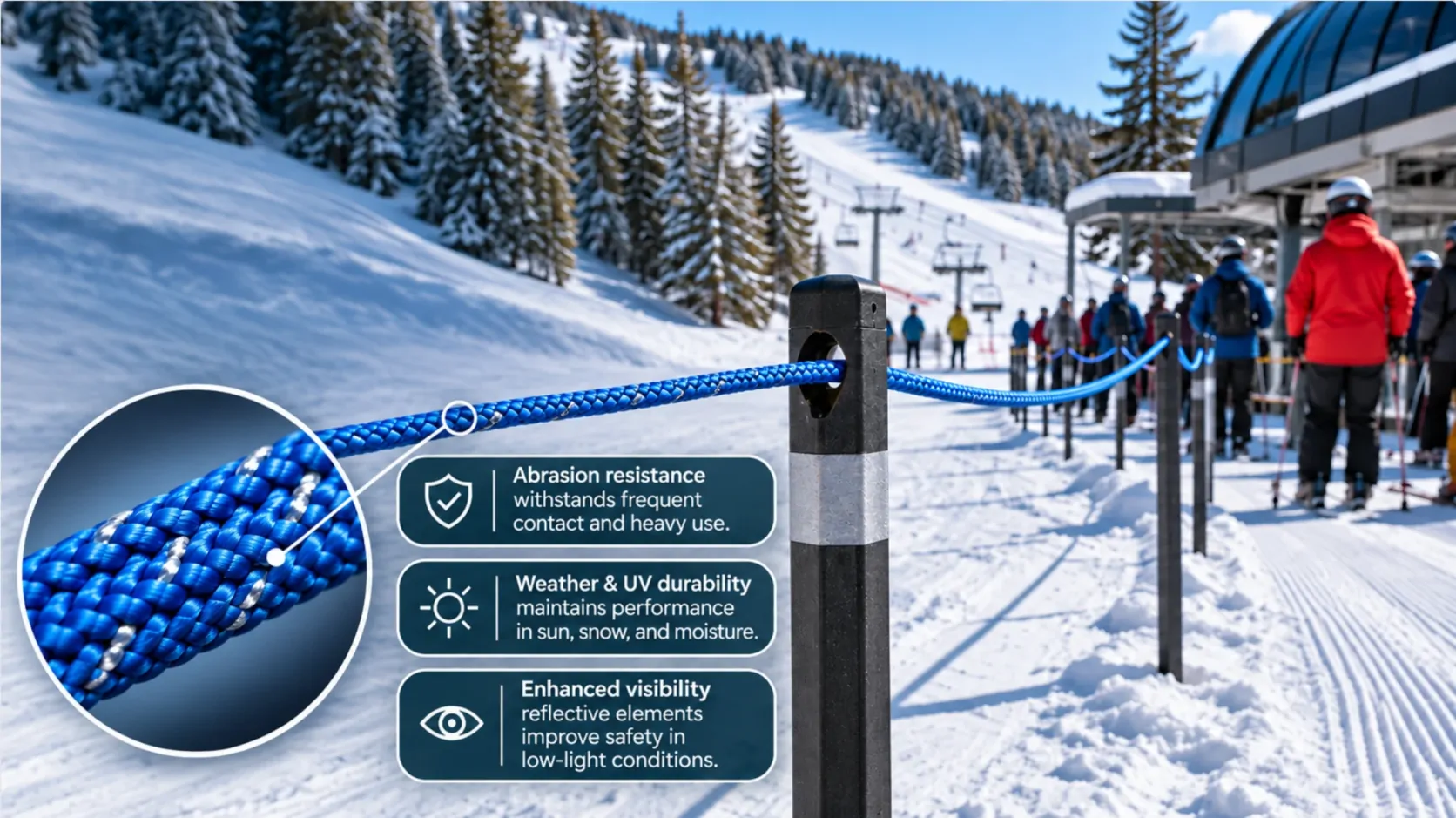
Ski resort queue rope: abrasion resistance, weather and UV durability, and reflective elements for low-light visibility.
Marine Conservation: When Stronger Isn't Always Better
One of the clearest examples of application-specific rope engineering comes from commercial fishing.
While many applications prioritize high breaking strength, certain marine conservation requirements demand a different approach.
IBISWorld's Fishing in the US report (January 2026) highlights how environmental regulations, gear restrictions, and sustainability initiatives are influencing commercial fishing operations. In some cases, operators must modify their equipment to address environmental requirements and reduce unintended harm to marine wildlife.
Under NOAA Fisheries' Atlantic Large Whale Take Reduction Plan, specific fishing gear configurations require approved weak rope or other approved weak components intended to help reduce the severity of whale entanglements.
These specialized constructions are engineered to break under specified loads, potentially allowing an entangled whale to separate from fishing gear.
NeoCorp manufactures specialized weak-rope constructions that have received NOAA Fisheries approval for applicable fishing gear requirements.
These products demonstrate how carefully engineered breaking strength can address operational requirements while supporting marine wildlife protection efforts.
They also reinforce an important principle: the best rope for an application is not necessarily the strongest rope, but the one engineered to meet its specific performance requirements.
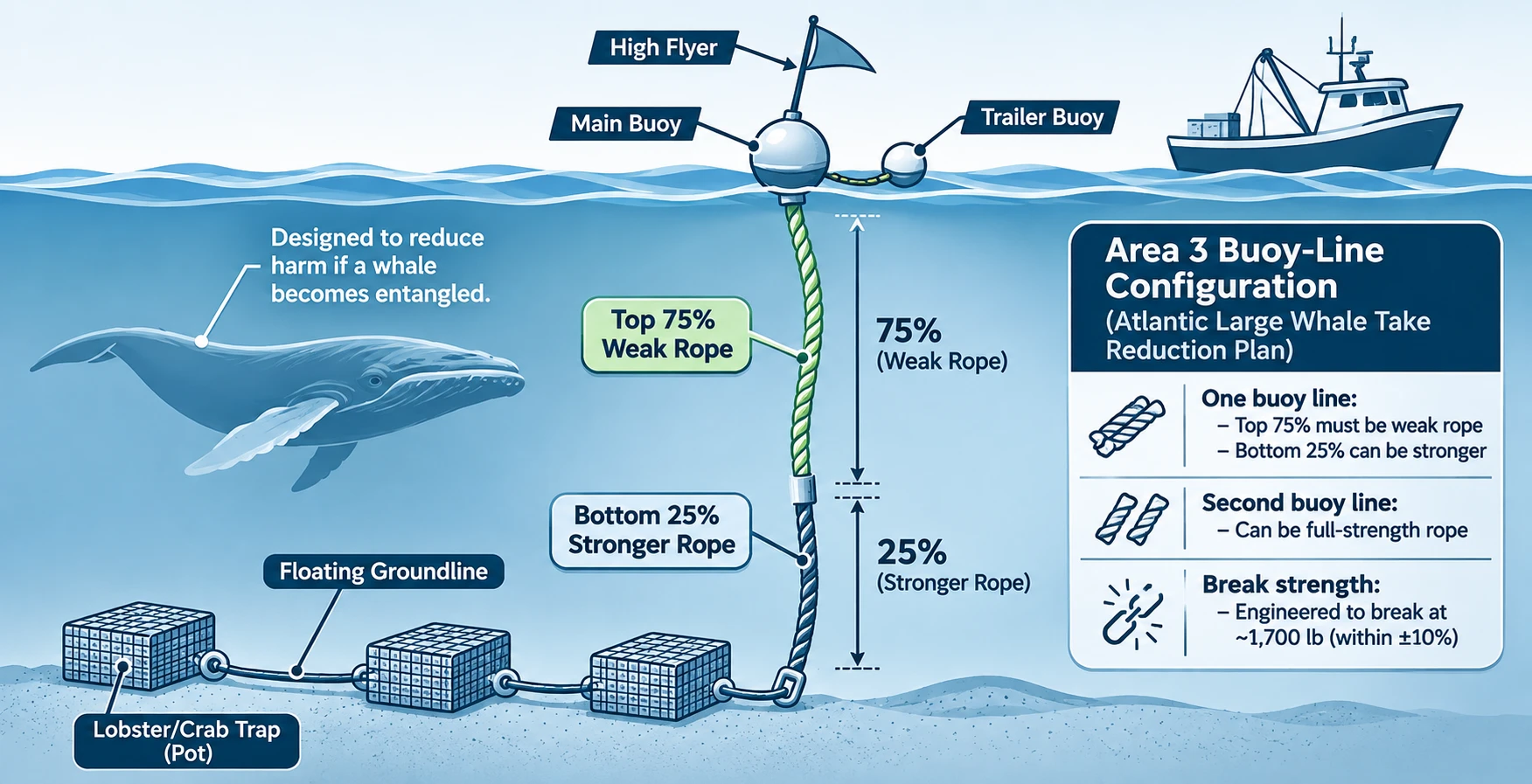
Area 3 buoy line: the top 75% is weak rope engineered to break at about 1,700 lb, while the bottom 25% can be stronger rope.
What These Industry Trends Mean for Manufacturers
Although these industries serve different markets, they share a common challenge: selecting rope and bungee that meet the specific requirements of the finished product.
For OEMs and product manufacturers, several performance characteristics deserve careful evaluation:
Breaking Strength: Selecting appropriate strength characteristics for the expected loads and operating conditions.
Stretch and Recovery: Understanding how cordage elongates and returns to its original dimensions under repeated use.
Environmental Resistance: Evaluating exposure to sunlight, moisture, abrasion, and temperature changes.
Specialized Performance: Considering low-creep, reflective, non-reflective, and other application-specific properties.
Product Design Compatibility: Choosing appropriate materials, diameters, colors, and braid constructions for the finished product.
Across these markets, industry research points to a growing emphasis on product differentiation, technical performance, and more deliberate purchasing decisions.
For manufacturers, these trends reinforce the value of evaluating components based on how they contribute to the finished product rather than treating them as interchangeable materials.
Engineered Cordage for Changing Industry Needs
At NeoCorp, we understand that selecting the right rope or bungee involves more than choosing a diameter or meeting a basic strength requirement.
We work with OEMs, product designers, and manufacturers to evaluate their applications and identify cordage constructions suited to their technical requirements.
Our manufacturing capabilities include options for materials, diameters, colors, braid constructions, and specialized performance characteristics, including controlled stretch, environmental resistance, and application-specific breaking strength.
Whether the application involves a pet accessory, recreational product, theater equipment, or demanding commercial environment, the objective remains the same: selecting cordage engineered for its intended use.
The Right Rope Starts With the Right Engineering
Rope and bungee may be small components of a finished product, but their performance can influence its functionality, reliability, and overall quality.
As industries evolve and product requirements become more specialized, thoughtful material selection remains an important part of manufacturing dependable products.
At NeoCorp, we don't just manufacture rope. We help manufacturers develop cordage solutions engineered for the applications they serve.
Developing a product that requires specific strength, stretch, durability, or material characteristics?
Contact NeoCorp's Engineering Team to discuss your application and explore the right rope or bungee solution.
NeoCorp | Engineered Rope & Cordage Solutions
Made in the USA | www.neocorp.com